Today we have a guest blog from Meredith Veto, one of our Team Leads.
Every year around this time, I can feel Mexico start to change. Marigolds line the streets, markets fill with candles and sugar skulls, and the smell of pan de muerto drifts from neighborhood bakeries. Families build altars in their homes, and cemeteries fill with conversation and laughter.
I’m American, but for fifteen years Mexico has been home. My husband is Mexican, our sons were born here, and I’ve come to understand that Día de Muertos, so often described as “colorful” or “joyful,” is really a conversation with death – not feared or hidden, but faced with love and humor. It’s not an escape from death; it’s an embrace of it.
An Intimate Companion
Octavio Paz wrote that Mexicans “chase after death, mock it, court it, hug it, and sleep with it.” He believed that Mexico’s relationship with death reveals its soul. It’s not a forbidden subject, but a constant companion. It’s toyed with, adorned, honored, and ultimately…just part of life.
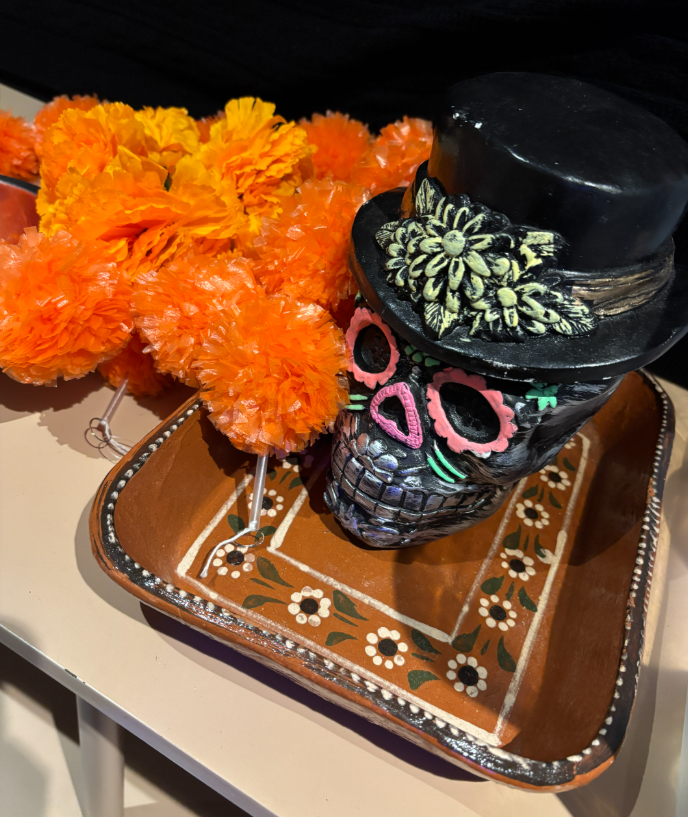
In the United States, we tend to push death away. We avoid talking about it, we soften its edges, and hide it with euphemisms. But here in Mexico, death is everywhere: painted on walls, sold as sugar, sung about in corridos, remembered with laughter and tequila. It’s not feared or denied; it’s faced, and even loved.
And for many families, the ofrenda, a home altar built to welcome back loved ones, becomes a bridge: a place where memory takes physical form in small, familiar objects, each one telling a story. Día de Muertos is about recognizing death as the mirror of life, reflecting who we are, what we value, and how we love.
Living Between Languages and Worlds
For me, this season always brings back the feeling of standing between worlds. I’m both an insider and outsider: fluent in the language, steeped in the culture, yet always aware of my distance. That space between understanding and belonging is where I’ve learned the most.
Language and culture are inseparable. Words alone can’t capture the tenderness of a mother arranging her child’s photo on an ofrenda, or the humor woven into calavera verses. Translating these moments requires more than linguistic skill; it requires cultural empathy – the ability to feel the heartbeat behind the words.
At Multilingual Connections, that’s the bridge we build every day: helping people communicate across languages without losing their humanity. Our work isn’t just about what words mean, it’s about what they carry.
Translating What Can’t Be Translated
Día de Muertos teaches a lesson that applies far beyond translation: meaning lives in context. You can’t understand this celebration by translating its name to “Day of the Dead.” The phrase loses its pulse. The reality is layered: spiritual, communal, defiant, and deeply loving.
When we translate with cultural insight, we don’t flatten those layers; we honor them. We allow each story, each language, and each worldview to keep its shape, because authenticity matters more than approximation.
Honoring the Continuum
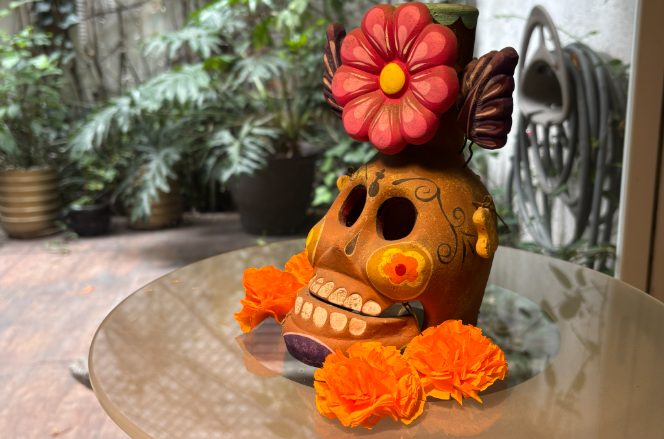
Every year, as I light candles on our family’s ofrenda, I think of the continuum we all belong to: between life and death, memory and presence, language and silence. My grandmother’s lipstick and an icy glass of sweet tea sits beside her photo, a bright echo of who she was. Death, I’ve learned, doesn’t erase connection. It reveals it – the same way language, when understood with care, reveals meaning that might otherwise be lost.
In our work and in our lives, we strive for that same kind of understanding, one that listens deeply, honors context, and recognizes the beauty of what endures. Because to truly connect across cultures is to see life in full: its beginnings, its endings, and everything in between.
At Multilingual Connections, that’s what guides our work. We help people understand not just the words, but the worlds behind them. Because every language holds memory, meaning, identity, and connection waiting to be revealed.
Interested in learning more about how we can help ensure nuance and trust?
FAQ
How does Día de Muertos relate to language and cultural understanding?
Día de Muertos beautifully illustrates how language and culture are intertwined. A literal translation of “Day of the Dead” misses the warmth, humor, and celebration at the heart of Día de Muertos. For us at Multilingual Connections, it’s a reminder that to communicate meaningfully across languages, you must also understand the cultural perspective behind the words — the traditions, values, and emotions that give them life.
How does Multilingual Connections ensure that translations reflect cultural context?
Our translators and linguists are native speakers who bring local insight to every project. They understand not only the language but also the culture — from tone and idioms to symbolism and social norms. That insider knowledge helps your message connect authentically with audiences around the world, whether you’re running a global campaign, conducting research, or building community relationships.
Why is cultural intelligence important in global communication and research?
Cultural intelligence helps organizations go beyond simply being understood to truly resonating with their audiences. When language services consider cultural context — not just grammar — communication becomes more inclusive, persuasive, and trustworthy. At Multilingual Connections, we help clients navigate these nuances to build stronger cross-cultural relationships and more impactful messaging.