Multilingual audio annotation for AI and speech technology
Every speech AI model starts with the same question: does the training data reflect how people actually speak? Building accurate speech AI takes more than clean recordings. It requires training data that captures real conversations across languages, dialects, accents, and the real-world audio conditions that no studio recording can fully recreate.
That is where Multilingual Connections comes in. We provide multilingual audio annotation services delivered by experienced linguists who understand both language structure and annotation methodology, not crowdsourced workers completing tasks from a marketplace queue.
Founded by a linguistic anthropologist, our team supports technology companies and research organizations with structured speech data labeling, transcription, segmentation, speaker diarization, and dataset validation across dozens of languages, including rare languages and regional dialects where other vendors struggle to staff reliably.
What our audio annotation services include
Transcription and segmentation
Our multilingual audio transcription services turn speech recordings into clean, structured text with precise timestamps and segment boundaries. Whether you’re preparing data for ASR training, forced alignment, or downstream NLP tasks, every transcript is designed to deliver the accurate, time-coded output your workflow depends on.
Speaker diarization
Our speaker diarization services identify and label individual speakers within multi-speaker recordings, including overlapping speech, turn-taking, and cross-talk annotation. Consistent speaker labeling across large datasets helps AI models learn to distinguish voices in real-world conversation involving, interruptions, overlapping, etc.
Language and dialect identification
Our language identification services tag the spoken language, dialect, and regional accent within recordings. Because this work depends on understanding how people actually speak, every project is handled by native-speaking linguists ensuring accurate language and dialect tagging.
Intent labeling and linguistic annotation
Our semantic annotation services apply structured labels including intent classification, sentiment tagging, named entity recognition, and other task-specific annotation schemas defined by your project guidelines. These annotation frameworks are applied consistently across datasets and validated for inter-annotator agreement.
Non-speech event tagging
Our non-speech audio tagging services identify and label non-speech audio events within recordings, including environmental sounds, background noise, and paralinguistic cues such as laughter, hesitation markers, coughing, and other real-world audio occurrences.
Dataset review and validation
Our dataset QA services provide an independent review of annotated datasets against source audio and project guidelines to identify errors, inconsistencies, and label drift before delivery. This can be used as a standalone QA layer for datasets produced by other vendors, or as a final validation step on MLC-annotated projects.
Annotation types we support
Our teams support a wide range of speech data annotation tasks, including:
- Speech transcription
- Speaker diarization
- Utterance segmentation
- Language and dialect identification
- Intent and semantic labeling
- Speech event and noise tagging
Annotation formats and data delivery
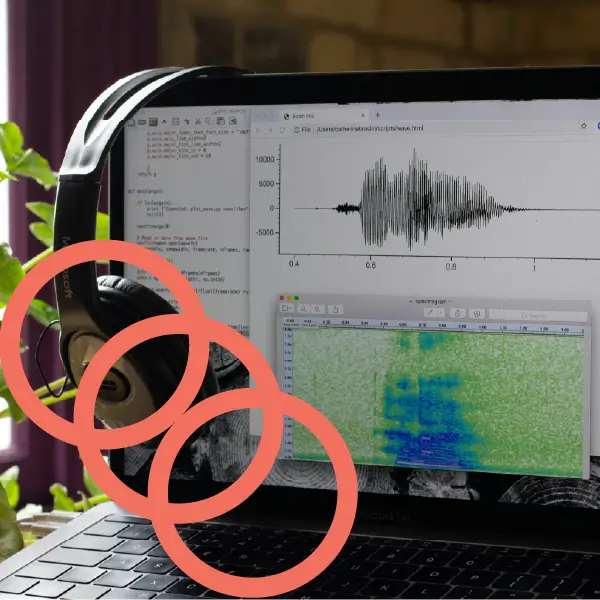
Annotated datasets can be delivered in formats compatible with common machine learning pipelines, including:
- Timestamped transcripts
- Speaker-segmented transcripts
- JSON or CSV structured annotation files
- Time-aligned speech event labels
- Custom schemas defined by project guidelines
We work with client-defined annotation frameworks and can adapt workflows to existing annotation tools and data pipelines.
Why multilingual speech annotation is challenging
Speech data often contains linguistic and acoustic variation that automated tools struggle to interpret. Multilingual datasets may include regional accents, code-switching between languages, overlapping speakers, and background noise.
Accurately labeling this type of audio requires annotators who understand both linguistic context and the structure of speech data. Our linguists bring language expertise that helps ensure complex multilingual audio is annotated consistently and accurately.
Why human linguists produce better annotation outcomes
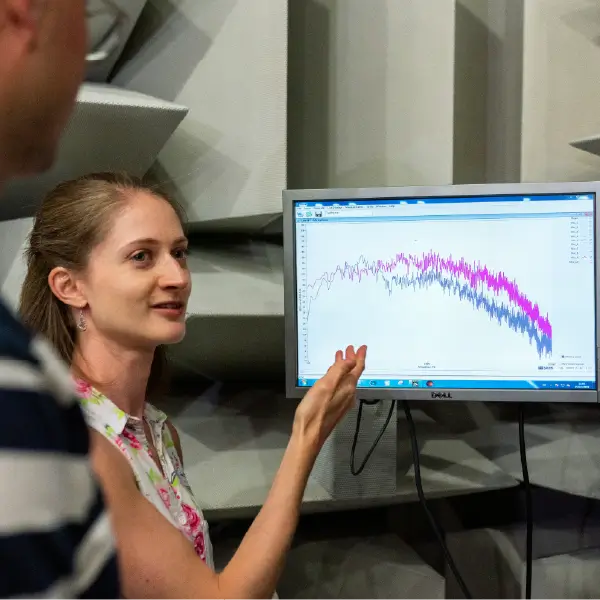
The conditions where speech AI training data is most needed are the exact conditions where automated annotation tools perform worst.
- Scenarios involving low-resource languages, regional dialects, heavy accents, background noise, overlapping speech, and code-switching require human annotators with genuine language expertise to label accurately.
- Annotation errors, such as an incorrectly classified intent, can propagate through model training. Once that happens, it shows up as model error at scale, and fixing it after training is far more expensive than catching it during annotation.
- Linguists bring knowledge of phonetics, grammar, prosody, and regional language variation that no automated tool and no general-purpose crowdsourced workforce can replicate.
With MLC, you are not getting whoever is available on a platform. You are getting linguists matched to your specific language, dialect, and task requirements. Let us support your team in developing speech recognition systems, conversational AI, or multilingual language models, etc.
Who We Work With
Multilingual Connections works with technology companies building or fine-tuning automatic speech recognition systems, voice assistants, and conversational AI platforms that need structured, reliable multilingual training data across a range of languages and real-world audio conditions. We also support AI data providers and research organizations that are sourcing multilingual speech datasets for model development and benchmark evaluation.
Media and transcription platforms use our dataset review and validation services to independently verify annotation quality across large volumes of multilingual audio before it goes into production or is delivered to clients. And global organizations managing multilingual content workflows rely on our linguistic annotation services for structured labeling that supports downstream analysis, compliance, or search and retrieval applications.
Why choose Multilingual Connections for audio annotation
- Founded by a linguistic anthropologist: annotation work is grounded in language expertise and research methodology, not just task completion metrics
- Linguists, not crowdsourced workers: every project is staffed with native-speaking linguists selected for language expertise, dialect knowledge, and annotation methodology experience matched to your specific requirements
- Coverage across rare languages, dialects, and accented speech varieties where other vendors cannot reliably staff qualified annotators
- Full annotation task range under one vendor: transcription, segmentation, diarization, language identification, intent labeling, non-speech event tagging, and dataset validation
- Outputs delivered in formats compatible with common ML pipelines, scoped to your delivery specifications
- QA built into the workflow from the first file, so quality is confirmed as the work happens.
- Operating since 2005 with experience across technology, research, and global enterprise clients
- Flexible project scoping: annotation projects are staffed and structured according to your requirements, not forced into a one-size-fits-all pipeline, which makes MLC accessible to teams with niche languages, non-standard formats, or evolving project needs
Contact us about your project
Frequently Asked Questions
What is multilingual audio annotation?
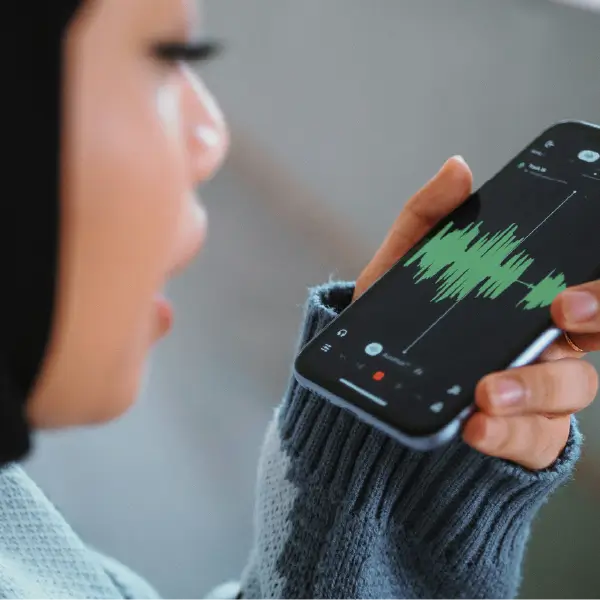
Multilingual audio annotation is the process of labeling speech recordings across multiple languages, dialects, or accents with structured metadata such as transcripts, speaker IDs, language tags, and intent classifications. These labeled datasets are used to train and evaluate AI systems including ASR engines, voice assistants, and conversational AI platforms. At Multilingual Connections, annotation is handled by human linguists with native fluency in the target language, not automated tools or general-purpose crowdsourced workers.
Why human linguists instead of automated annotation tools?
Automated tools fail systematically on low-resource languages, regional dialects, heavy accents, background noise, and code-switching speech. These are the exact conditions where high-quality training data is most needed and hardest to produce. Human linguists with native-language expertise and annotation methodology experience catch errors that automated tools miss and apply consistent judgment across complex, real-world audio.
What is speaker diarization?
Speaker diarization is the annotation task of identifying and labeling which speaker is talking at each point in a multi-speaker recording. It is a critical preprocessing step for building AI systems that need to distinguish between voices in real-world conversation conditions, including overlapping speech, turn-taking, and cross-talk.
What languages and dialects do you support for audio annotation?
We support annotation across dozens of languages including rare languages, regional dialects, and accented speech varieties. Linguists are matched to each project based on native fluency in the specific target language or dialect, rather than drawn from a fixed language list, which means we can staff projects that other vendors cannot.
Featured services

Market research translation
Nuanced translation services that capture cultural context and consumer sentiment, helping you understand your multilingual audience and gain insights that drive strategic decisions. Our market research specialists understand survey methodology and qualitative analysis requirements, have experience working with many research platforms, and understand research workflows and timeline requirements.
Business translation
Professional business translation services that maintain your desired corporate tone while adapting messaging for international markets. From employee communications to client presentations, we help global organizations speak consistently across cultures while respecting local preferences and business practices.
Legal translation
Certified legal translation services handled with strict confidentiality and regulatory compliance. Our legal linguists understand jurisdictional differences and maintain precision required for contracts, court proceedings, and regulatory documentation.
AI-enhanced translation
Technology-assisted translation services that combine the efficiency of artificial intelligence with professional linguistic review. Our AI-enhanced process delivers culturally nuanced, high-quality results with optimal cost-effectiveness for suitable content types.