Food safety programs are only as strong as the people executing them. When those people are working in a language that isn’t their own, following procedures they’ve partially understood, and completing training they never fully grasped, the gap between your documented system and your actual system widens. That gap is where compliance failures and safety incidents live.
And that’s the problem food safety translation addresses. At its core, food safety translation is the accurate, compliance-aware rendering of the rules that govern your entire operation. This means translating critical documents like HACCP plans, SOPs, training materials, allergen labeling, and audit records into the languages your workforce, suppliers, and regulators actually use. The goal isn’t just text rendered into another language. The goal is documentation clear enough to act on correctly, every time, whether your operation runs on one production floor or across facilities in several countries.
Who’s actually on your production floor
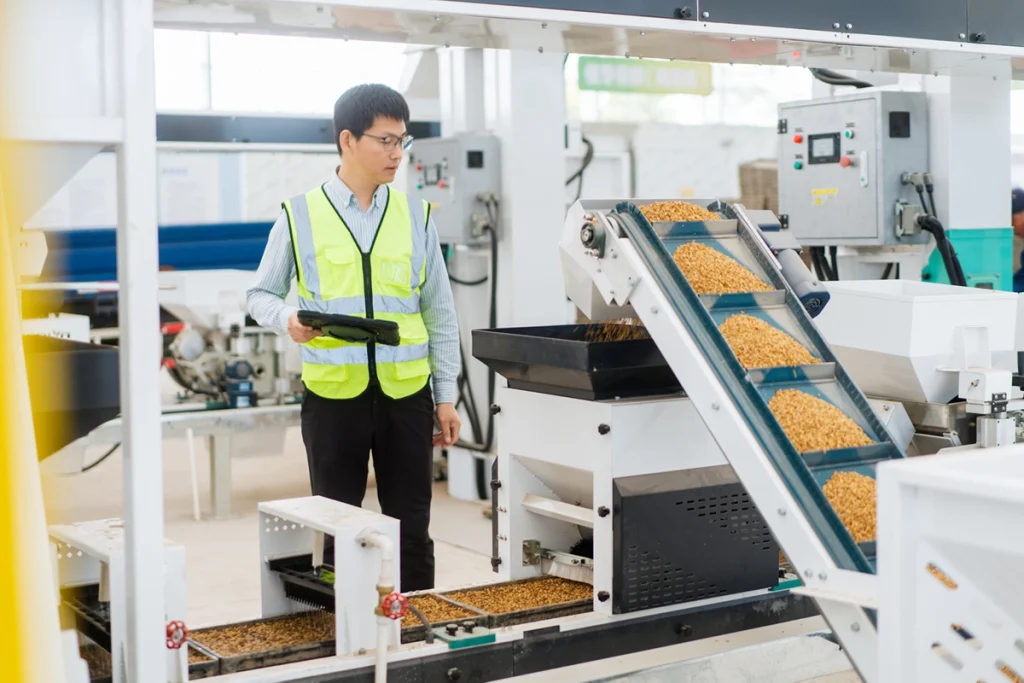
Food manufacturing has always drawn multilingual workforces, but the breadth has expanded significantly. In many US facilities today, Spanish, Somali, Vietnamese, Hmong, Karen, and Arabic speakers may all be working the same line. USDA and industry workforce data consistently show that immigrant and non-native English-speaking workers represent a substantial share of the food manufacturing labor force. In meat and poultry processing, that share is often a majority. And for companies with international operations, the language question multiplies: the same training and procedures need to work in every facility, in every market.
OSHA is explicit about what this means for employers. Under federal guidance, training must be delivered “in a manner that employees can understand.” If an employee doesn’t speak English, instruction must be provided in a language they do understand. But regulatory pressure is only part of the picture. A workforce that can’t fully access your safety documentation is a workforce executing your food safety program from incomplete information. And that’s a risk no FSQA director can afford.
What the research shows
The evidence on language and food safety outcomes is consistent and worth knowing before your next audit.
Research published in the Food and Nutrition Journal found that when food safety training was delivered in workers’ native language, knowledge retention improved significantly. That finding carries direct weight when workers need to execute hygiene procedures, temperature controls, and allergen protocols correctly, every time.
The International Food Protection Training Institute documented language as a primary barrier to effective training in multilingual facilities, particularly for urgent safety procedures and corrective actions that require rapid comprehension on the production floor. When a line worker doesn’t fully understand a sanitation procedure or allergen protocol, the risk of cross-contamination doesn’t just increase. It becomes structurally embedded in your operation.
Why do language gaps create compliance and safety risk?
The risks concentrate in a few predictable places, and most of them do their damage long before an audit makes them visible.
Procedural drift. When SOPs exist only in English, informal translation fills the gap, and it’s often different across shifts and across supervisors. One team executes a critical control point one way; another does it differently. The procedure may exist on paper, but consistent execution doesn’t. That inconsistency is a liability during audits and a safety risk every day.
Training that doesn’t transfer. Word-for-word translation of a training module isn’t the same as effective translation and training. Workers may complete the module without truly internalizing what they need to know, particularly for HACCP procedures, allergen protocols, and corrective actions where correct execution on the first attempt is the only acceptable outcome.
Allergen errors with real consequences. Allergen statements are among the most tightly regulated and least forgiving elements of food labeling. The distinction between “may contain” and “contains,” how source ingredients are declared, and whether cross-contamination risks are disclosed are legally and clinically significant. A single mistranslated allergen statement is a Class I FDA recall waiting to happen.
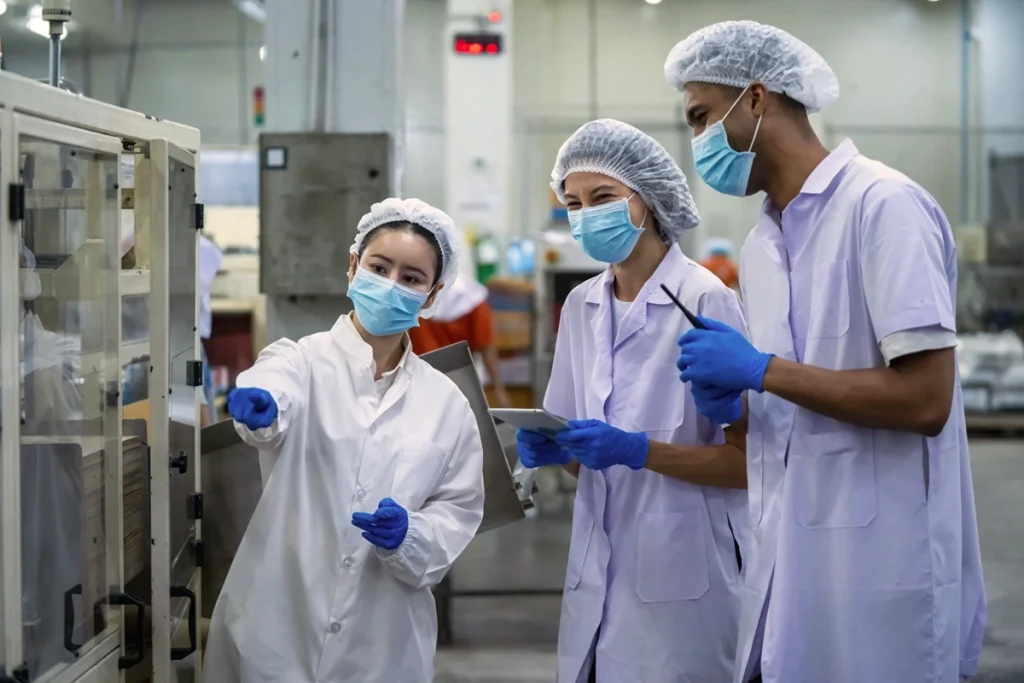
Audit readiness gaps. Inspectors assess whether your documentation matches your workforce. If SOPs and training records exist in English and your team works in Spanish, Vietnamese, or Somali, auditors will flag the mismatch. Translated documentation isn’t just a workforce accommodation. It’s a compliance record.
What does food safety translation actually cover?
For FSQA leaders managing multilingual operations, the document scope is broader than most people initially account for.
HACCP plans and critical control point procedures. These are the non-negotiable starting point. Every person working at a critical control point needs to understand their specific responsibility in the language they actually use at work. Ambiguity at a critical control point is a food safety failure waiting to occur, and in a regulated environment, it’s also an audit finding.
Employee training materials. Training that exists only in English is training that doesn’t fully reach a multilingual workforce. Effective food safety training translation means onboarding guides, sanitation instructions, hygiene procedures, and safety briefings rendered in workers’ primary languages, with terminology that has been reviewed, approved, and applied consistently across all materials. For many organizations, that increasingly means eLearning localization—voiceover, on-screen text, and interactive elements adapted so the same course lands equally well with a Spanish-speaking team in Wisconsin and a production team in São Paulo or Ho Chi Minh City. A word-for-word translation of a training module isn’t localization. Real localization accounts for how people actually learn and apply information in their language.
Workforce policies and HR documentation. The same logic extends past the training room. Employee handbooks, rights notices, HR policies, and general workplace communications are part of the language access picture for any multilingual facility. Workers who can’t fully read a disciplinary policy, understand their rights, or access company procedures in their primary language aren’t just underserved. They represent a compliance exposure that sits squarely in the intersection of employment law and food safety culture.
Allergen warnings and product labeling. These require both linguistic accuracy and regulatory compliance. FDA safety standards govern not just what information must appear, but how it must be presented, and those requirements aren’t interchangeable across markets. Allergen labeling errors are among the leading causes of food recalls, which makes this one of the highest-stakes translation tasks in the industry—and it only gets more complex as you sell into more countries.
Regulatory and audit documentation. Inspection reports, corrective action records, SOPs, and certification files must be accurate and consistent across every language version. Discrepancies between language versions of the same document create audit delays and non-conformance findings, sometimes on documents that were compliant in the original language but introduced errors in translation.
Supplier documentation and traceability records. Modern food supply chains are global, and major certification frameworks require traceability documentation that auditors can review regardless of the language in which source documents originated. Certificates of analysis, supplier agreements, and chain-of-custody records all fall within scope, and translation errors in these documents can disrupt audits and create gaps in your traceability record.
Where common shortcuts break down
Facilities often try to manage language gaps with approaches that create more risk than they resolve.
AI translation is the tempting one right now, and it certainly has legitimate uses. Getting the gist of an incoming supplier email? Reasonable. But food safety documentation lives at the intersection of regulatory language, technical terminology, and real consequences, and that’s where general-purpose tools like Google Translate and ChatGPT run into trouble.
The core problem is that AI translation produces fluent, confident-sounding text, and that’s exactly what makes their errors dangerous. A clumsy translation announces itself; a fluent wrong one sails through review. The difference between “may contain” and “contains” is a legal distinction that an AI tool can flatten without anyone noticing until the recall. These tools also perform unevenly across languages: they’re strongest in widely spoken languages like Spanish and weakest in exactly the languages many food facilities need most—Somali, Karen, Hmong—where training data is thin and error rates climb.
And some problems have nothing to do with output quality. Free AI tools offer no terminology management, so “critical control point” comes back three different ways across three documents. There’s no QA trail or accountability an auditor can review. And pasting proprietary SOPs, supplier agreements, or unreleased product formulations into a public AI tool raises confidentiality questions of its own. Regulatory language, allergen declarations, and safety procedures need human review by someone who understands both the language and the compliance context. The liability exposure from a single AI translation error in a safety-critical document typically exceeds the cost of professional translation many times over.
Relying on bilingual employees is a similar trap. Your bilingual team members are trusted and skilled, but they’re translating on top of their regular responsibilities, without subject matter training in food safety compliance, without QA review, and without documentation that survives their eventual departure. When they leave, the terminology consistency and institutional knowledge go with them. For allergen statements and safety-critical documentation, that reliance also puts an unfair burden on individuals who carry no professional liability protection if something goes wrong. Professional linguists carry errors and omissions insurance for exactly this reason.

What does a functional multilingual food safety system look like?
Effective multilingual food safety documentation isn’t a translation project. It’s a system, and it integrates with your existing quality infrastructure.
That means approved terminology in every language your facility uses, so that “critical control point” and “allergen cross-contact” are rendered consistently across every document, every shift, every market. It means version control so that when a procedure changes, all language versions update together. It means documents tested for clarity with the workers who actually use them, not just reviewed for linguistic accuracy. And it means visual reinforcement—icons and diagrams that work across every language on your floor.
It also means knowing where to start. Not everything requires professional translation immediately, and the right sequence depends on risk. Here’s how to triage:
Language barriers can quietly become career barriers
What to translate first
| Document Type | What's at Risk if It's Misunderstood | Priority |
|---|---|---|
| Allergen statements and product labeling | A single mistranslation can trigger a Class I recall or a serious allergic reaction. | First |
| HACCP plans and critical control point procedures | Inconsistent execution at exactly the points designed to prevent hazards; audit findings. | First |
| Critical SOPs and corrective action procedures | Procedural drift across shifts; slow or incorrect responses when something goes off track. | First |
| Safety-critical training materials | Workers complete training without fully comprehending it, creating safety risks and OSHA compliance exposure. | Next |
| Employee handbooks and HR policies | Workers can't fully access their rights and responsibilities, increasing employment-law exposure. | Next |
| Audit and certification documentation | Discrepancies between language versions can lead to non-conformance findings and audit delays. | Next |
| Supplier and traceability records | Gaps in the traceability chain may surface during audits or product investigations. | As Needed |
| General workplace communications | Lower safety risk, but workers receive the message that important information isn't equally accessible to them. | Can Follow |
Start at the top and work down. Most facilities are better served by three documents translated well than thirty translated fast.
Ready to close the language gaps in your food safety program?
This is the work Multilingual Connections has done for food manufacturers, processors, and food industry organizations since 2005: SOP translation, allergen labeling, multilingual training and eLearning development, employee handbook and HR policy translation, and interpretation for audits and regulatory meetings—across 75+ languages, for companies operating domestically, internationally, or both.
Whether you’re managing a multilingual facility, preparing for an audit, or scaling into new markets, we understand the intersection of language, regulation, and operations. If you already know which documents keep you up at night, tell us about them. If you don’t, that’s a useful conversation too. Contact us to discuss!
FAQ
Does OSHA require safety training in languages other than English?
OSHA requires that training be presented in a manner employees can understand. Per the agency’s 2010 training standards policy memorandum, if an employee doesn’t speak or comprehend English, instruction must be provided in a language the employee does understand. Compliance officers verify comprehension, not just the existence of training records, and deficiencies can be cited as serious violations.
Do HACCP plans need to be translated for non-English-speaking workers?
Yes, when workers involved in critical control points don’t share the language of the documentation. HACCP is a preventive system that only functions when every person responsible for executing it understands their role clearly. Documentation that workers can’t fully read doesn’t exist operationally.
Can we use ChatGPT or Google Translate for food safety documents?
Not for anything safety-critical or regulated. AI translation tools produce fluent-sounding text that can contain errors in regulatory language, allergen declarations, and technical terminology, and they perform worst in the less widely spoken languages many facilities rely on. Small errors in these documents can result in recalls, compliance failures, or worker safety incidents. Human review by linguists with food safety knowledge is essential.
Can’t our bilingual employees just translate our SOPs?
They can, but it creates risk. Bilingual staff translate on top of their regular responsibilities, without food safety translation training, QA review, or terminology management, and the knowledge leaves when they do. For safety-critical documents, it also places liability on individuals who carry no professional protection if a translation error causes harm.
Which documents should we translate first?
Start with the highest-risk material: allergen statements and product labeling, HACCP plans, critical SOPs, corrective action procedures, safety-critical training, and employee handbooks. General informational content can follow. Priority should be driven by what could trigger a recall, a non-conformance finding, or a safety incident if misunderstood.
How do we know if our translations are actually helping?
Ask the workers who use them. Have team members who work with the SOPs review translations for clarity before they go live. During audits, observe whether workers can explain critical procedures confidently in their language. Consistent, accurate execution across shifts and language groups is the clearest signal that your multilingual documentation is functioning.