Multilingual desktop publishing
Translation gets your content into a new language. Multilingual desktop publishing gets it looking exactly as it should once it’s there. Without that second step, even a perfectly translated document can lose professional polish the moment the layout breaks, text overflows a text box, or a font renders the wrong characters for the target language.
Multilingual Connections provides multilingual desktop publishing services across 75+ languages as part of a connected translation and localization workflow. For example, when we worked with Üllo on their multilingual campaign, our team recreated product guides in InDesign alongside the transcreation and localization work. See the full project.
What our desktop publishing services include
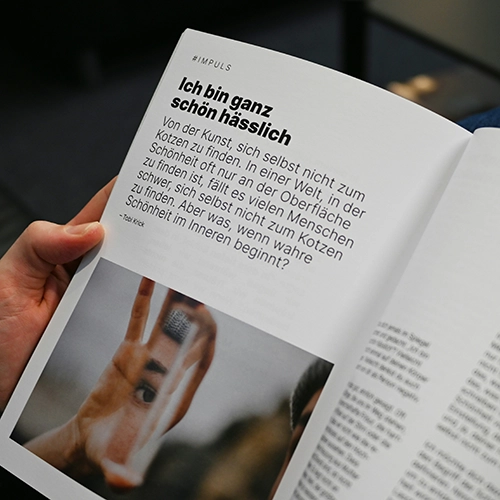
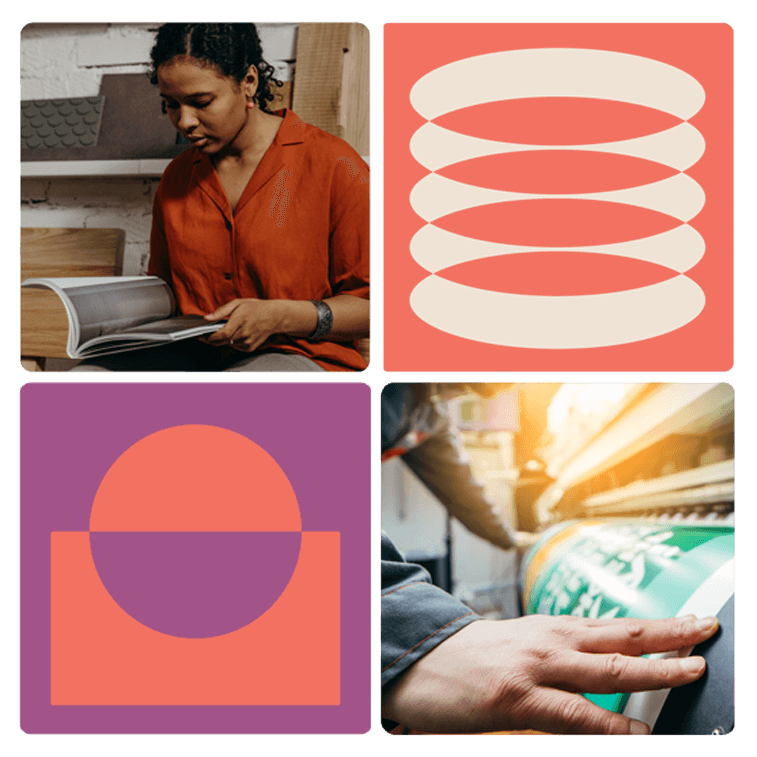
Our professional linguists translate your slides, marketing collateral, catalogs, and user manuals in over 75 languages, and our design and typesetting experts provide multilingual desktop publishing to ensure they’re print-ready for your audience. We work within your existing layout and handle the challenges of formatting documents in foreign languages, scripts, and fonts.
- Brochures
- Print Advertising
- Online Content
- Presentations
- Product Manuals
- eLearning

Brochures and print advertising
Layout-intensive marketing collateral is where translation alone runs out of road. When translated text expands or contracts relative to the original, every design element around it needs adjustment: text frames, image placement, white space, and overall visual balance. We work from your existing design files and return print-ready, professionally typeset materials that look like they were built for the target language, not retrofitted into it.
Product manuals and technical documents
Structured, multi-page content is where consistent formatting carries as much weight as accurate translation. Tables, numbered steps, callout boxes, footnotes, headers and footers — all of it needs to hold together across language versions. For right-to-left languages like Arabic and Hebrew, that includes full layout mirroring, not just text direction changes.

Presentations and eLearning
Slide decks, training materials, and eLearning modules need their visual design to stay intact as the content changes language. Font substitutions, text length changes, and directionality can all disrupt a carefully designed presentation. We resolve those issues at the layout level, so your team or your learners see a finished product, not a translation draft.

File formats and software we work with
Our desktop publishing team works across all professional design and publishing tools, from Adobe InDesign, Illustrator, and Photoshop to Figma and Canva for design, Microsoft Office and Google Workspace for documents and slides, and Articulate Storyline for eLearning. We deliver print-ready and digital-ready files in PDF and native formats alike. If your source files are in something not listed here, let us know. We can often work directly with what you have, or advise on the best conversion path before work begins. If your source files are in a format not listed here, let us know. We can often work directly with what you have or advise on the best conversion path before work begins.
Graphic design and translation tips
Translation changes more than text. It changes how that text sits on a page, and understanding what to expect before a project begins saves revision cycles later. Here’s what our team accounts for on every multilingual DTP project:
- Directionality: languages like Arabic, Hebrew, Farsi, and Urdu read right to left, the require a fully mirrored design, with page structure, columns, image placement, and navigation all adapted accordingly.
- Word and text expansion: translated content often runs longer than the source. German, for example, typically expands English text by 20 to 30 percent. Spanish and French expand it by 15 to 25 percent.
- Number and date formats: date formats, decimal separators, currency symbols, and thousands separators vary by language and region. A document that uses 1,000.00 in English needs to use 1.000,00 in German.
- Line spacing and character sets: some languages, particularly those using non-Latin scripts, require adjusted line spacing to display correctly.
- Punctuation: spacing around punctuation marks varies across languages. French, for example, requires a non-breaking space before colons, semicolons, exclamation marks, and question marks.
- Fonts: not all fonts support extended Latin characters, non-Latin scripts, or bidirectional text. Choosing a font that doesn’t cover the full character set of the target language is one of the most common DTP errors on multilingual projects.
Connect with us to discuss your unique project needs and how we can partner with you to ensure success!

Why choose Multilingual Connections for desktop publishing
- Founded by a linguistic anthropologist, which means layout and design decisions are made with cultural context in mind, not just software proficiency
- We handle full print production in-house, from InDesign layout to press-ready files, across dozens of languages and complex multi-market campaigns.
- DTP is part of a connected pipeline, not a separate department: translation, transcreation, and desktop publishing are available under one vendor relationship, which means terminology and design decisions stay consistent across the full project
- Trusted since 2005 by clients including Netflix, Google, Uber, State of Illinois, and Allstate.75+ languages supported, including right-to-left languages requiring full layout adaptation
Request a quote
It all starts with a first connection. Tell us how our international network of linguists and dedicated project managers can help!
Frequently Asked Questions
What is multilingual desktop publishing?
The design and layout work needed to make translated content look professional and print-ready, adjusting for text length, fonts, directionality, and formatting conventions in the target language. It’s the step between a completed translation and a document that’s ready to publish, print, or distribute.
Do you need DTP if your document is already translated?
Usually yes. Translated text often expands or contracts relative to the original, and layouts that worked perfectly in the source language can break when text length or character set changes. Even a clean translation needs DTP work to stay readable, on-brand, and print-ready in the new language.
What file formats do you support for desktop publishing?
We work across all the major design, document, and eLearning tools, including the Adobe suite, Figma, Canva, Microsoft Office, Google Workspace, and Articulate Storyline, and deliver in PDF and native formats. If your files are in something else, get in touch and we’ll advise on the best approach.
How do you handle right-to-left languages in design?
Layouts are fully adapted for right-to-left languages such as Arabic and Hebrew, including mirrored page structure, appropriate font selection, adjusted spacing, and correct directionality throughout. It’s not just a text direction change. It’s a full layout rebuild oriented for how readers of that language actually read the page.
Featured services

Marketing
translation
Engage your audiences on a global scale with our powerful and culturally relevant marketing translation in 75+ languages.

Market
research
translation
Nuanced translation services to help you understand your multilingual audience and gain insights that make a world of difference.

Website & app
localization
Comprehensive language solutions tailored to your global business strategy to support your growth in international markets.