ESOMAR, Mel Brooks’ Spanish Inquisition, and “my grandparents’ language”
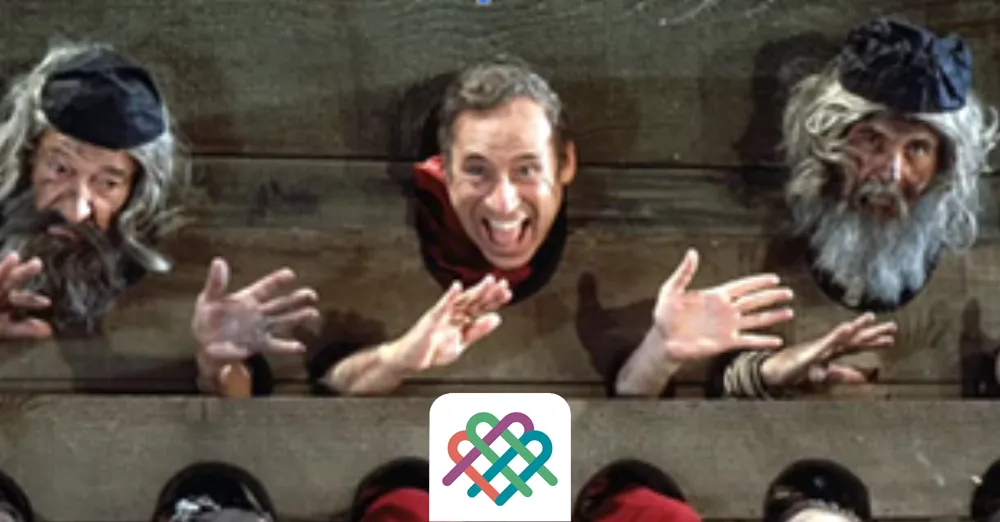
You may remember Mel Brooks’ toe-tapping sketch about the Spanish Inquisition in History of the World, Part I: a cartwheeling Grand Inquisitor, synchronized swimming nuns, and Jews being forced to convert to Catholicism at risk of torture, expulsion, or death. The brutality of that experience lost in a catchy tune.
And you may rightfully ask what, if anything, this has to do with ESOMAR Congress?
For me, planning a trip to Valencia to attend ESOMAR was not just about attending a conference but a chance to return to Barcelona, where I had spent my junior year of college decades prior.
As we (me + COO/husband) started to plan for ESOMAR, we decided to spend a week in Morocco first, and then make our way from Valencia to Barcelona to see local friends I hadn’t seen since I was 21. I pored over old photo albums, trying to remember what it felt like to leave everyone I knew and move to another country. No internet for research. No email or cell phones to help stay connected. I remember college friends wishing me a good trip and asking me to eat a taco for them.
Mint tea in Tangier
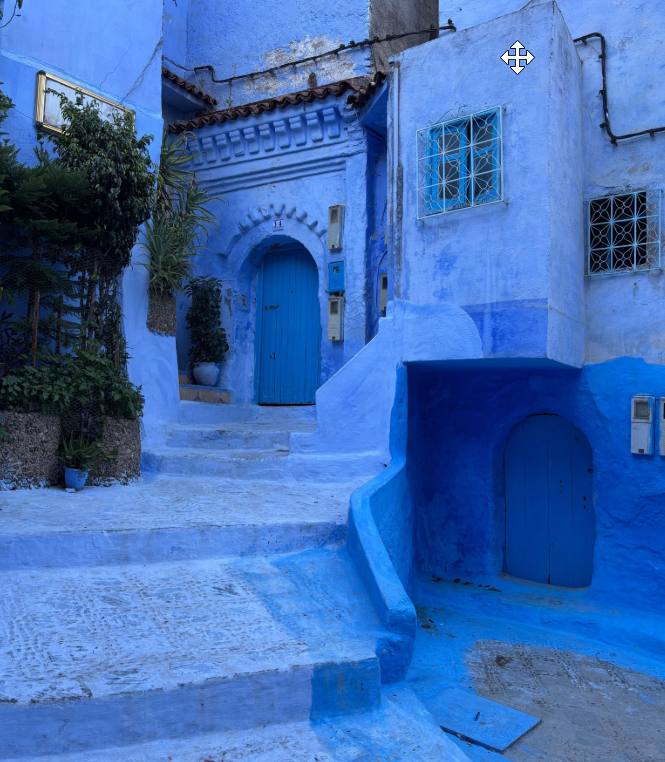
In Morocco, I was struck by the colors and contrasts. The mountains, desert, and water. The vibrant fruits, vegetables, and spices in the markets. An entire town painted blue. I was also struck by the warmth of the people. The offer of mint tea at every turn. A work contact we barely knew who took PTO and spent three days showing us his country. A taxi driver who asked to buy us breakfast on our way to the airport so we could spend a little more time together and he could treat us to traditional Moroccan pancakes.
That same driver talked about growing up in multicultural Tangier among Muslims, Christians, and Jews, in a neighborhood where everyone looked out for each other. His mother made couscous every Friday, as Moroccan families do, and sent him next door with a portion for the Jewish neighbors’ Sabbath meal. Then he told me what I already knew, which is that there are very few Jews left in Morocco. Morocco had been a refuge for Spanish Jews fleeing violence and persecution in 1391 and again a century later, when the Edict of Expulsion of 1492 forced them to convert or leave (no cartwheeling inquisitors or catchy tunes this time). The friends I would see in Barcelona were descendants of this community.
It’s just my grandparents’ language
As a student in Barcelona, I was lucky enough to fall in with a group of local Spaniards, creating an opportunity to really practice my Spanish while developing strong friendships and seeing Spain from the inside. Every so often, one of them used a word that sounded unfamiliar, and when I asked, I got a shrug: it’s just my grandparents’ language.
Their grandparents’ language was Haketia, a variety of Judeo-Spanish spoken by descendants of the Jews forced to flee Spain in 1492, rejecting forced conversion and settling in North Africa. The language is based on Medieval Spanish, with Hebrew and Moroccan Arabic woven through it.
My own grandparents spoke Yiddish, another Jewish fusion language built on German and spoken by Ashkenazi (Eastern European) Jews. While my generation typically spoke less Yiddish than this generation of Sephardic (Spanish) Jews spoke of Haketia, the recent generational transmission has been similar: native speakers of the language, the next generation bilingual, and the next generation left with words and expressions used intentionally to mark identity, community membership, or to express nuance that can only be done in that language. And the reference to “my grandparents’ language” was typically the same. Low in prestige, but high in emotional connection.
Back in Barcelona, I had dinner with those friends for the first time since 1991. One in particular had been born in Tangier. His family returned to Spain in the early 1970s, a few years after the 1492 Edict was formally revoked (yes, almost 500 years later). We caught each other up on decades of family and career changes and reminisced about common friends, and I was surprised to learn that he remembered my fascination with his grandparents’ language. What he didn’t know was that it was my exposure to Haketia that prompted my interest in language and identity and that would start me on a path to a doctorate in linguistic anthropology, with a year of fieldwork in Israel on efforts to keep Judeo-Spanish from disappearing completely. That focus on linguistic nuance and the connection between language and identity would later inform the work we’ve been doing at Multilingual Connections for over 20 years.
Shortcuts and one-size-fits-all
Walking familiar streets and marveling at Gaudí’s architecture, I reflected back on my year abroad and my college friends’ request that I eat a taco for them in Spain: prior to the internet, frequent international travel, and the popularization of tapas restaurants, their assumption that tacos were popular in Spain and not just Mexico was understandable. We tend to make assumptions based on limited experience and apply a one-size-fits-all approach.
Now reflecting on the Inquisition sketch. Ashkenazi and Sephardic Jews share a religion, but language, culture, foods, and dress historically have differed. In the sketch, the Jews were dressed as Ashkenazi and used Yiddish-accented English with the Yiddish “Oy gevalt!” thrown in. For an American audience, actors dressed as Sephardic Jews and speaking Judeo-Spanish never would have resonated—so this swap was a necessary shortcut.
These kinds of shortcuts, whether intentional or not, remove nuance and flatten language and culture.
1300 people from 80 countries
And now finally to Valencia and ESOMAR, where 1300 market research professionals from more than eighty countries gathered. I attend more US conferences than international ones, and the range of languages and cultural backgrounds was incredible. Great conversations, a lot of laughter, real warmth of connection.
And as global research professionals whose work is about understanding the lived experience of international audiences, nuance is what we’re seeking. Everyone there works from the premise that the differences matter and are meaningful—that a question landing well in one market can land badly in another. That premise is everything.
What a translator or bilingual moderator hears
When research depends on authentic multilingual voices, the difference between surface-level data and meaningful insight is often a person. A translator who flags that a respondent switched languages mid-answer, and what that switch was doing. A bilingual moderator who can rephrase a question on the spot when it isn’t working, who understands the history and cultural weight of particular words and expressions, and who knows when an answer is polite rather than true.
The cost of skipping that expertise isn’t only a bad translation. A taco in the wrong Spanish-speaking country, traditional dress borrowed from the wrong group, a campaign that reaches for the most recognizable version of a culture instead of the real one—those choices alienate the very people they’re meant to connect with. You can’t put a sombrero on something, add an accent, and call it multicultural. That’s dressing up as a community rather than listening to one, and people recognize it instantly when the community is their own.
Language as a travel agency
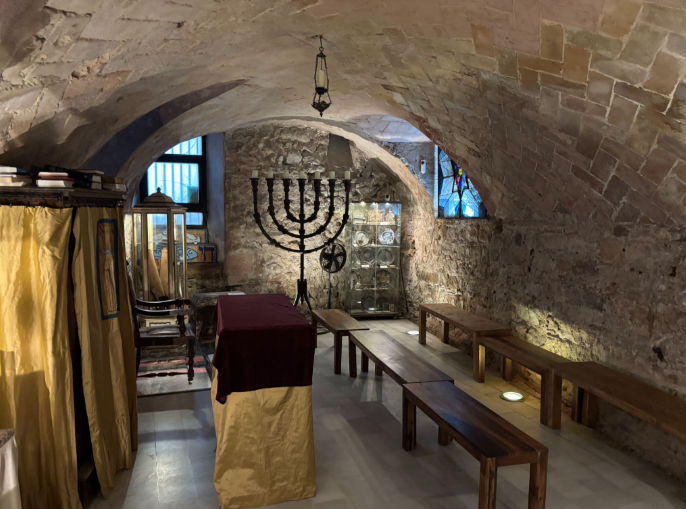
In Barcelona I also visited the oldest synagogue in Europe, and thought about the path forced on the Sephardim centuries ago. They left with the little they could carry, and they carried their language, which continued to evolve over the centuries through contact with other languages. There are fewer speakers of Judeo-Spanish every day, but the ones who still speak it do so intentionally, to connect themselves across time and space to their community.
During my fieldwork in Israel among Judeo-Spanish speakers, a man named Vitali, who billed himself as the only standup comedian in this endangered language, told the room that Judeo-Spanish was more than a language. It was a travel agency. Everyone laughed, because they knew exactly what he meant. It took them to childhood, to their grandparents’ kitchens, and to places they had only ever heard about.
Which brings me back to Mel Brooks. He gets a pass—he had a few seconds for his 1981 American audience to get the joke, and he knew precisely what he was trading away to do it. Those of us trying to understand people rather than make them laugh don’t get the same grace. Our shortcuts can cost us the insight.
As technology makes translation easier, it’s essential to remember the humanness of language. What we do with and through language. What it means to us, and what culture and assumptions and emotions lie underneath. Whether you’re one of the 1300 people at ESOMAR working in global research, or your focus is in international marketing, public health, food safety, or government, language is an essential element that needs to be planned for, budgeted for, and not left as an afterthought.